How will AI and disruptive technology change the sector's workforce and skills needs?

A landmark research project into the impact of AI and disruptive technology on skills
The Financial Services Skills Commission is leading research into the impact of AI and other disruptive technologies on the sector's workforce, and subsequent skill needs over the next 5-10 years. Through the research, we will analyse and recommend how skills can drive growth and productivity by supporting the adoption and innovation of AI, and other disruptive technologies, in financial services.
To complete this robust piece of work, we are seeking significant input from a wide range of parties within the sector, and beyond, including government, financial services, and the technology sector. The work is supported by Lloyds Banking Group, PwC, TheCityUK and the City of London Corporation.
Supporting growth and competitiveness
This is the first phase of a landmark project, announced by HM Treasury, as part of the government’s Financial Services Growth and Competitiveness Strategy. The Economic Secretary to the Treasury formally commissioned the research in November 2025. We are working in collaboration with HM Treasury and Skills England to deliver the project.
How is the project progressing?
Phase one
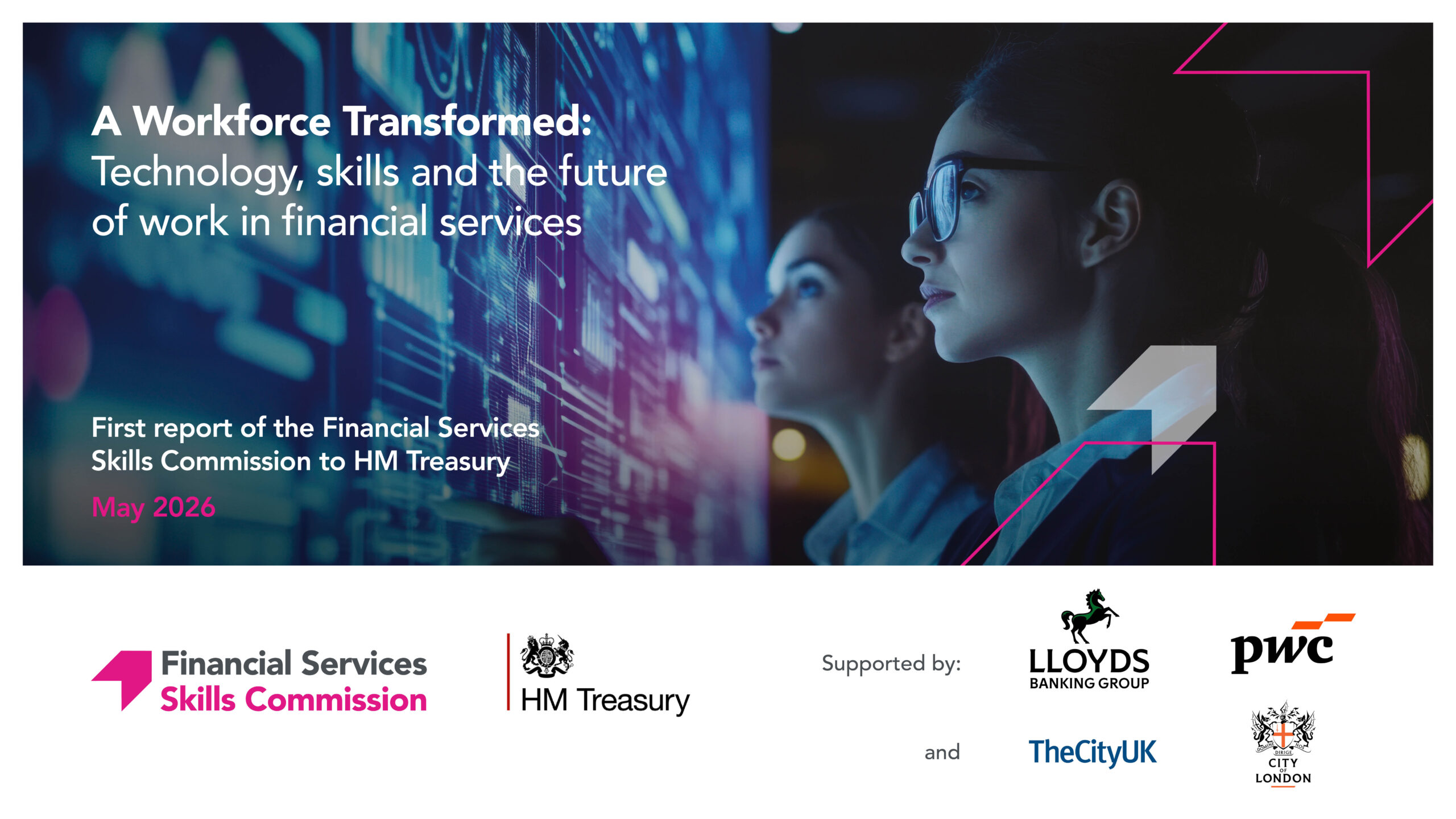
Phase one of the research was focused on assessing the expected impact of disruptive technologies on the sector. It looked at the potential for growth and productivity, as well as the skills that will be needed over the next 5-10 years for successful adoption and deployment of technology. We published our first report in May 2026.
We worked in collaboration with government and the wider sector to develop the first phase. This included roundtables with 190 delegates and interviewees from 113 organisations. We also led a call for evidence, desktop research and the creation of original data.
Download 'A Workforce Transformed'
Next steps
Following publication of our first report, we are commencing phase two of the research. Through this phase, we will identify how the sector can build future talent, and address emerging skills gaps. This will lead to a detailed set of recommendations. To complete this robust piece of work, we will need input from a wide range of parties within the sector, and beyond. We expect to publish a final report in early 2027.